

Muslim Women & Mental Health , Heres What Islam Says
Why Muslim Women Are More Likely to Ignore Their Mental Health — And What Islam Actually Says About It
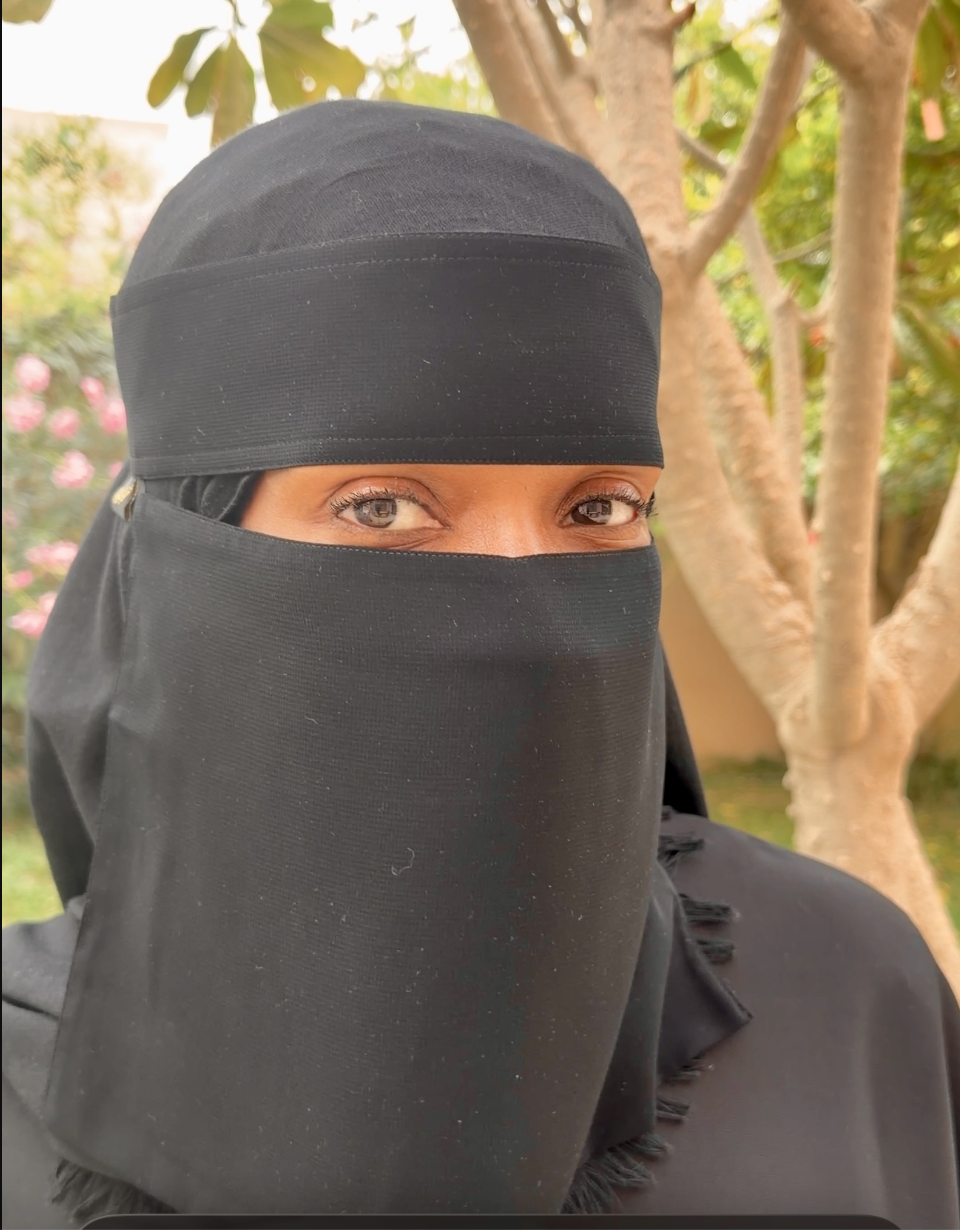
I want to tell you about a sister I knew years ago. She prayed all five prayers. She fasted every Ramadan without complaint. She showed up for everyone. Her family, her masjid, her friends, her neighbors. If you asked her how she was doing, she would smile and say Alhumdullilah. Every single time. Alhumdullilah.
She was not okay.
And nobody knew, because we were all raised to believe that saying Alhumdullilah is the answer, even when it's covering something that needs attention. I'm not saying we shouldn't say it. We should. Gratitude is medicine, truly. But somewhere along the way, many of us learned to use it as a curtain. Something to pull closed so nobody looks any further. So we don't have to look any further.
There is a version of strength that has been sold to Muslim women for generations. It looks like carrying everything and asking for nothing. It looks like being the last one to eat, the last one to rest, the first one up and the last one down. It looks like holding the whole family together while quietly falling apart.
Let me be clear about something. That version of strength is not from Islam. It got dressed up in Islamic language somewhere along the way, and it has been worn for so long that many of us can't tell the difference anymore. But it is not our deen. And it is costing us.
The Reality We Need to Name
Muslim women are among the least likely groups to seek support for their mental health. I have watched this for over twenty years working in wellness. The reasons are real and they are layered. Cultural stigma. Fear of what people will say. The absence of counselors who understand our faith. And underneath all of it, one damaging belief: that if you are struggling, your iman must be weak.
Can I tell you the truth? Mental health struggles visit the most pious among us. They arrive in the homes of women who never miss a prayer. Depression does not check your record of good deeds before it enters. Anxiety does not care how many times you completed the Quran. These struggles are part of being human, and being human is exactly how Allah created us.
Iman is a resource. A powerful one, walahi. But iman was never meant to be a wall we hide behind so no one sees us suffering. When we tell a struggling sister to just pray more, and we stop there, we have handed her half a mercy and called it complete. Genuine tawakkul has always included taking the means Allah provided. Always.
What Islam Actually Says
Islam has never been silent about the mind. We were.
The preservation of the Aql, the intellect and the mind, is one of the five objectives of Islamic law. The Maqasid al-Shariah. Think about that for a moment. Of everything Islamic law exists to protect, your mind made the list. It is not a footnote. It is not a side matter. Your mental health is central to your deen, not separate from it.
And look at our Prophet ﷺ. He experienced grief so deep that an entire year of his life is known in our history as the Year of Sorrow. عام الحزن. The year he lost his beloved wife Khadijah and his uncle Abu Talib. He did not hide his grief. He did not perform strength for the people around him. He grieved, openly, and his humanity in that moment was a mercy for every single one of us who would grieve after him. Struggle is not weakness. Feeling pain is not a failure of faith. Our Prophet ﷺ showed us that himself.
أَلَا بِذِكْرِ اللَّهِ تَطْمَئِنُّ الْقُلُوبُ
"Verily, in the remembrance of Allah do hearts find rest."
Surah Ar-Ra'd, 13:28
Read that ayah again. Allah acknowledges that hearts are unrestful. He does not deny the pain. He does not tell us to pretend it isn't there. He points us toward comfort. That is not dismissal. That is simply mercy.
And when it comes to seeking treatment, the Prophet ﷺ said: "Make use of medical treatment, for Allah has not made a disease without appointing a remedy for it." The mind is not exempt from this hadith. Seeing a therapist is not a betrayal of your tawakkul. It is your tawakkul, in action. It is taking the means, just like we take medicine for the body, just like we tie our camel.
Why This Is So Hard for Us Specifically
I have lived in Muslim communities on two sides of the world. Upstate New York, and over twenty years in Saudi Arabia. And I can tell you the pressure on Muslim women looks different in different places, but it is always there.
We are the emotional center of our homes. We hold everyone together. The children, the husbands, the parents, the community events, the grief of others. And somehow we are given the least permission to fall apart ourselves. Who holds the one who holds everyone?
Many of us grew up in homes where mental health simply was not discussed. Where depression was called ingratitude. Where anxiety was called weak trust in Allah. Where going to therapy meant airing the family's business to strangers. Where the answer to every internal battle was pray more, and the conversation ended there.
I am not blaming our mothers and grandmothers. They did what they knew, and many of them carried unimaginable weights with no support at all. May Allah reward them for every hidden tear. But we do not honor them by repeating the silence. We honor them by breaking it.
This is changing now. Slowly, Alhumdullilah. And conversations like this one are part of how it changes.
What Mizan AI Sees That You Might Miss
Here is something I have learned about us. We are usually the last to know we are struggling. We normalize it. We push through it. We tell ourselves next week will be calmer, and next week never comes. By the time we admit something is wrong, we have usually been carrying it for months.
This is one of the reasons I made sure the Fitrah Fitness app includes a Mental Wellbeing score. Mizan AI does not ask you how you feel. It reads the evidence. Your sleep patterns. Your activity. The quiet shifts in your daily habits that change before your mood does. When your mental wellbeing starts to dip, it shows up in your data before it shows up in your words.
It is not a diagnosis. It is not a verdict. It is a gentle tap on the shoulder that says, pay attention to yourself, sister. Before a dip becomes a decline.
What to Actually Do
If something in this article touched a nerve, don't scroll past that feeling. Sit with it for a minute. Then do this.
First, name it. You don't have to tell anyone yet. Just be honest with yourself. Something is not okay. That is allowed. That is human. It does not make you a bad Muslim. It makes you an honest one.
Second, don't wait for it to get worse before you take it seriously. We would never ignore a physical wound and hope it heals on its own for months. The mind deserves the same urgency we give the body.
Third, look for support that understands your world. Muslim therapists and faith-aware counselors exist now, and they are more accessible than they have ever been. You do not have to choose between your healing and your deen. You never did.
Fourth, please understand this. Rest is not laziness. Asking for help is not weakness. Caring for your mind is not a distraction from your worship. It is part of it.
Your mind is an amanah. Treat it like one.
One Last Thing
The Muslim women I have met in my twenty plus years of this work are the most resilient, giving, devoted women I have ever known. And for too long, that resilience has been used as a reason to ask more of them and give them less.
Fitrah Fitness exists because I believe Muslim women deserve a wellness home that sees all of them. Not just their bodies. Not just their workouts. Their minds. Their hearts. Their deen. All of it, together, the way Allah created us.
If your mental wellbeing has been sitting at the bottom of your list for a while now, consider this your invitation to move it up. You have carried enough, sister. Let something carry you for once.
References & Sources
1. Qur'an, Surah Ar-Ra'd 13:28 — "Verily, in the remembrance of Allah do hearts find rest."
2. Qur'an, Surah Al-Baqarah 2:286 — "Allah does not burden a soul beyond that it can bear."
3. The Prophet ﷺ said: "Make use of medical treatment, for Allah has not made a disease without appointing a remedy for it, with the exception of one disease — old age." Sunan Abu Dawud (3855); graded sahih by al-Albani.
4. The Year of Sorrow (ʿĀm al-Ḥuzn) — the death of Khadijah bint Khuwaylid (رضي الله عنها) and Abu Talib in the 10th year of Prophethood. See Ibn Kathir, Al-Bidayah wan-Nihayah.
5. The preservation of the ʿaql (intellect) as one of the five necessities (daruriyyat) of the Maqasid al-Shariah. See Ibn al-Qayyim, I'lam al-Muwaqqi'in; al-Shatibi, Al-Muwafaqat.
6. Abu Iyaad Amjad Rafiq, "The Medicine of the Heart and Body Is of Three Types and the Heart's Health Is a Foundation for the Body's Health," HealthyMuslim.com (2019) — on the division of medicine into medicine of the heart and medicine of the body, from Ibn al-Qayyim's At-Tibb an-Nabawi.






Join The Community
Be among the first.
Sign up for a free 7-day trial and look at everything we're building.