

The Self-Reliance Trap — Burnout, Tawakkul & Wellness
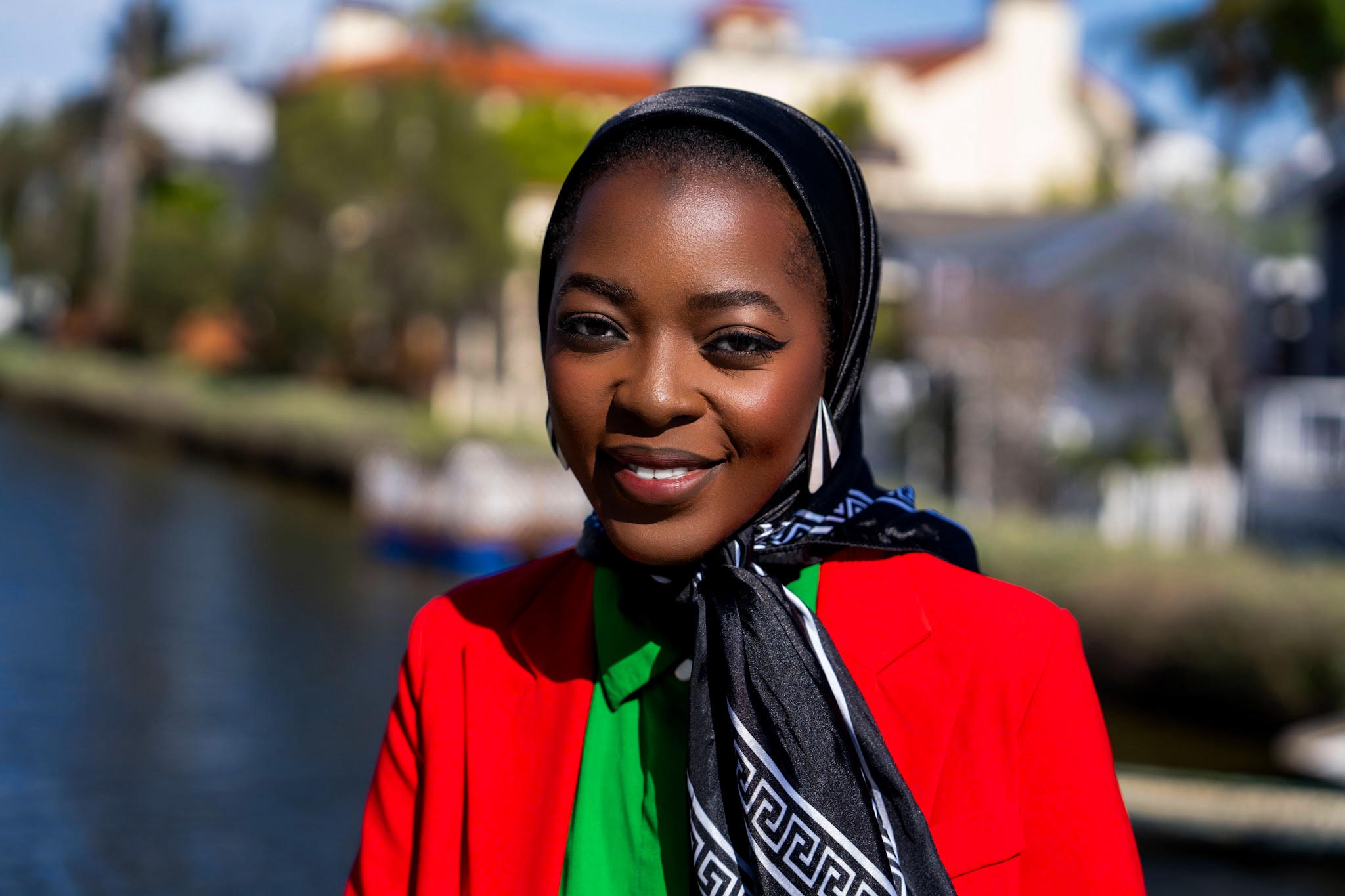

The Self-Reliance Trap: When Being a Capable Woman Starts Costing You Your Well-Being
I consider myself an ambitious woman. I go for things. I apply for the job. I start the business. I try something, fail at it, and try again. I have never been afraid of going after what I want and for a long time, I saw that as one of my greatest strengths. I knew how to figure things out. I knew how to keep going. I knew how to work. What I didn’t realize was that the very thing I was proud of (my ability to rely on myself) was slowly becoming one of the things exhausting me the most.
Where the Belief Started
I was raised by a single woman, and that shaped the way I understood responsibility from a very young age. There was no man in the home to rely on, and somewhere in my mind, I decided that work was always going to be part of my future. I understood early that I would have to become capable. I would have to make something of myself. I would have to be able to take care of myself. I remember even as a young girl feeling a kind of exhaustion about the future because I already imagined adulthood as something I would have to carry. Before I was old enough to understand what that weight meant, I had already assigned myself the responsibility of making sure I would be okay.
I remember starting to tutor when I was around 11 years old. At the time, I was excited about knowledge, but I was also excited about what knowledge represented to me. Knowledge meant that I could become ‘self-sufficient’ / financially independent. It meant that I could become capable enough to take care of myself and, eventually, the people I loved. Looking back, I can see how early I began to associate my ability to do things with my safety. The more I could do, the safer I believed I would be. Somewhere in that process, without consciously deciding to, I put myself in charge of myself. I began imagining a future in which I would be responsible for taking care of myself, my family, my finances, my future, and eventually everything else that life placed in front of me. I did not yet understand that being responsible and being in control were two very different things.
Then I Met Hustle Culture
Then I moved to America in 2013, and I encountered hustle culture in a completely different way. I saw what happens when an entire culture tells you that your life is in your hands and that the answer to almost every problem is to work harder, become better, become more disciplined, make more money, build more, and never stop. I absorbed that message while already having a deep instinct toward independence. So naturally, I became very good at it. I became very good at pushing myself, figuring things out, pursuing opportunities, and believing that if I could just put in enough effort, I could create the life I wanted.
The problem was that I actually started that journey with intention. I cared about why I was doing what I was doing. I had goals that meant something to me. I wanted my work to matter. I wanted to build a meaningful life. But intention is not something you set once and never revisit. It has to be renewed because there are so many things that can quietly redirect you. Somewhere along the way, I stopped simply building and started chasing. I started measuring myself by what I could produce, what I could accomplish, what I could earn, and what I could make happen. I was still moving, but I was no longer moving from the same place.
And that is the part of hustle culture we don’t talk about enough. It doesn’t always begin with a bad intention. Sometimes you begin with purpose, ambition, and a sincere desire to do something meaningful. Then the culture around you slowly teaches you to attach your worth to the outcome. You start believing that the next job, the next amount of money, the next achievement, the next relationship, or the next level of success will finally give you the feeling you have been looking for. So you keep going. You keep chasing. You keep reaching for the next thing.
I know what that feels like because I lived it. I got things I thought would make me feel fulfilled, and instead of feeling full, I often felt more exhausted. The goal would arrive and I would already be thinking about the next one. The achievement would happen and the relief would be temporary. I kept thinking that if I could just get the next thing right, I would finally feel secure. But the more I tried to control my life, the more pressure I felt inside of it.
Eventually, that exhaustion became burnout, and my burnout eventually became depression. That was the point when I could no longer treat what was happening as simply needing a better routine or needing to manage my time more effectively. I had to look underneath the exhaustion and ask myself what had created it in the first place.
What If Burnout Is More Than Doing Too Much?
That question changed everything for me because I realized that we often talk about the symptoms of burnout without talking about the belief underneath them. We tell exhausted women to rest, take a vacation, set boundaries, delegate, sleep more, exercise, meditate, and create a better ‘work-life balance.’ All of those things can be helpful, but what happens when you return from the vacation and still believe that everything depends on you? What happens when you have learned how to rest your body but still believe you have to control your future?
For me, the deeper issue was self-reliance. It was not capability, ambition, or hard work that was hurting me. It was the belief that I had to be the source.
There is a difference between knowing that you are capable of doing something and believing that you are the source of what happens. I can make an effort, but I cannot guarantee the outcome of that effort. I can apply for the job, but I cannot control who hires me. I can build the business, but I cannot control who buys from me. I can manage my money, but I cannot control every circumstance that affects my finances. I can make decisions about marriage, but I cannot control when another person enters my life. Yet so much of the way we are taught to think about success encourages us to behave as though everything is ultimately within our control.
That belief is exhausting because life constantly proves that it isn’t true.
Modern stress science gives us language for part of what happens here. Chronic stress does not simply live in our thoughts. Prolonged stress can involve repeated activation across multiple physiological systems, creating what researchers describe as allostatic load, or the cumulative burden of repeated adaptation to stress. Higher allostatic load has been associated with poorer mental and physical health outcomes. But even as I learned more about stress and the nervous system, I realized that there was another question I needed to ask… What happens when we understand the nervous system but leave the ruh/soul out of the wellness conversation?
The Missing Piece in the Nervous-System Conversation
The nervous-system conversation has given so many people language for experiences they could not previously explain. It has helped us understand why chronic stress matters, why the body responds to perceived threat, and why simply telling someone to calm down is not enough. I value that conversation because our bodies deserve to be understood and cared for.
But I began asking a different question. What happens when we care for the nervous system but never address the soul?
I could learn how to breathe more slowly. I could create a softer morning routine. I could take a break from my phone. I could learn grounding techniques. I could regulate my body and still return to the same internal belief that everything depended on me. I could calm myself down and then go right back to trying to control my life.
That was not enough for me.
I needed something that addressed not only how my body responded to uncertainty, but what I believed uncertainty meant. I needed to know who was actually in control. I needed to understand what I was placing my trust in. And that brought me back to Allah.
I began to see that many conventional approaches to nervous-system wellness can teach us valuable ways to work with the body, but they do not necessarily answer the deeper questions of the soul. Who am I? What am I here for? Who is ultimately responsible for my provision? What happens when my plans fall apart? Who do I trust when I cannot control what comes next?
For me, wellness could not be complete without those questions.
The Islamic Solution Was Not ‘Do Less.’ It Was ‘Rely Differently.’
My faith gave me an entirely different way of understanding wellness. I had to confront the fact that I had been trying to carry responsibilities that belonged to Allah. I knew intellectually that Allah was my Provider, my Guide, and the One I could trust, but there is a difference between knowing that as a religious concept and actually building your life from it.
“And whoever relies upon Allah, then He is sufficient for him.” (Quran 65:2-3)
This is not an instruction to stop working. Allah is inviting us to place the ultimate weight of reliance where it belongs. The Quran (53:39) also says that there is for a person only what they strive for. Together, these ideas gave me a framework that I desperately needed… I have a responsibility to strive, but I do not have a responsibility to control the result.
Allah can provide through my effort, but He is not dependent on my effort. He can open a door through my work, but He can also open a door I never knew existed. He can give me what I am asking for, but He can also redirect me toward something I could not have planned for myself. My responsibility is to make the intention and effort that is mine to make, to act with integrity, to seek what is good, and to leave the outcome with Him.
That distinction has changed the way I think about wellness.
I Had to Admit That I Didn’t Actually See Allah as Safe
But there was another layer I had to confront, and this one was uncomfortable.
I could tell myself to trust Allah all day long, but why was surrender so difficult? Why did I keep grabbing the outcome back? Why did I keep trying to control everything? Why did the idea of letting go feel unsafe?
Eventually, I realized that part of my struggle with reliance was that I had a poor opinion of Allah.
I knew about Allah, but I did not know Him deeply enough.
I did not truly see Him as safe.
I knew He was the Provider, but I was still afraid I would not have enough. I knew He was the Guide, but I still felt like I had to know every step. I knew He was Merciful, but I did not always live as though His mercy was something I could rest in. I believed in Allah, but my internal world was still organized around the assumption that I had to protect myself.
That realization changed my approach completely because perhaps you cannot surrender to someone you do not trust. Perhaps you cannot deeply trust Allah when your understanding of who He is has been reduced to information rather than relationship.
The Quran (59:22-23) tells us that to Allah belong the Most Beautiful Names. When I began learning those Names, I started to understand them differently. They were not simply names to memorize. They were invitations to know my Creator.
Every Name Answers a Need
When I needed provision, I had to know Ar-Razzaq, the Provider. When I needed guidance, I had to know Al-Hadi, the Guide. When I needed protection, I had to know Al-Hafeez, the Preserver. When I needed mercy, I had to know Ar-Rahman and Ar-Raheem, the Entirely Merciful and Especially Merciful. When I needed someone to entrust my affairs to, I had to know Al-Wakeel, the Trustee. When I needed to remember that Allah sees what I cannot see, I had to remember Al-’Alim, the All-Knowing.
The Names became a way of relating to the places where I felt most vulnerable. Instead of looking at my need and immediately asking myself how I was going to solve it, I could look at the need and remember who Allah is.
That changed the question from “How do I make myself feel safe?” to “Who is Allah, and what does knowing Him allow me to stop carrying?”
That was where surrender began to become natural for me.
A Good Opinion of Allah Is Part of Wellness
I began to realize that having a good opinion of Allah was not just a spiritual virtue. It changed the way I interpreted my life.
If I believe Allah is good, then a delay does not automatically mean abandonment. If I believe Allah is Wise, then a closed door does not automatically mean failure. If I believe Allah is the Provider, then uncertainty around money does not have to become a declaration that I am doomed. If I believe Allah is near, then I do not have to experience every difficult moment as though I am alone in it.
Quran 2:186 says, “I am near. I respond to the invocation of the supplicant when he calls upon Me.” That verse became more than something I knew. It became something I had to learn to live from.
There is also growing scientific interest in the relationship between spirituality, religious coping, stress, and health. Research does not prove my theology, and I would never want to use science to prove something that belongs to faith. But research increasingly recognizes that spirituality and religious coping can be relevant to how people experience stress, meaning, resilience, and mental health. Positive religious coping, in particular, has been associated in research with better psychological outcomes in some contexts, while religious struggle can have the opposite effect.
For me, the important distinction was that spirituality could not simply be another wellness tool. Allah was not another technique I added to my morning routine. He was the foundation from which I began to understand my life.
The Goal Wasn’t to Regulate My Nervous System. It Was to Return My Soul to Its Source.
This became one of the biggest shifts in how I understood my healing.
I stopped asking only, “How can I regulate my nervous system?” I started asking, “How can I take care of my soul?”
Because the soul has needs too.
And one of those needs is surrender.
The human being was never designed to be God. We have limits. We do not know the unseen. We cannot control timing. We cannot guarantee outcomes. We cannot control other people. We cannot control every circumstance. We cannot even guarantee what will happen tomorrow.
So when I unconsciously appointed myself as the one responsible for everything, I was asking myself to perform a job I was never created to do.
Allah never asked me to be the source. He asked me to worship Him, trust Him, strive, repent, seek guidance, and do what is within my responsibility.
That is a very different burden.
And perhaps that is why the pursuit of Allah began to change me in a way that simply learning regulation techniques never could. As I learned who Allah is, my soul began to surrender more naturally because it was moving back into alignment with the One who created it. I did not have to convince myself that I was the source anymore. I could return to the truth that I had never been the source.
Surrender Is Not One Big Moment
One of the biggest misconceptions I had about surrender was that it would happen once.
It doesn’t.
Surrender became a daily practice.
Sometimes it happened after I sent the email. Sometimes it happened after I completed the work. Sometimes it happened after I saved the money. Sometimes it happened after I made the plan. Sometimes it happened after I prayed for something.
I would do what was mine to do and then consciously give it back to Allah.
I did the task, and I gave it to Allah. I made the plan, and I surrendered it to Allah. I saved what I could, and I surrendered the provision to Allah. I pursued the opportunity, and I surrendered the outcome to Allah. I made the dua, and I surrendered the timing to Allah.
This was how I began retraining my relationship with uncertainty.
I didn’t become passive or pretend that I do not care. I repeatedly remind myself that this is my responsibility, while the outcome belongs to Allah.
And when the mind came back looking for the outcome, I surrendered again.
You Have to Surrender Your Plan to His
There was another realization that humbled me.
I had spent so much time asking Allah to bless my plan that I had not spent enough time asking whether my plan was actually His plan for me.
I knew what I wanted. I knew where I wanted to go. I knew what I thought my life should look like. But I had rarely stopped to consider that Allah might have a plan for me that was better than the one I had created.
And I had evidence.
There were things I had prayed for, received, and still felt unsatisfied by. There were things I had chased because I thought they would finally make me feel secure, only to discover that the feeling disappeared almost as soon as I got them.
That taught me something I could not have learned through achievement alone. Getting what you want is not the same thing as receiving what is good for you.
Sometimes Allah’s plan is not the plan you would have written. Sometimes the closed door is protection. Sometimes the delay is preparation. Sometimes the redirection is mercy. And sometimes, what you thought was the destination was only the thing that taught you what you actually needed.
Once I began to believe that Allah’s plan could be better than mine, I no longer had to force my life to look exactly the way I had imagined it.
A Different Way to Practice Wellness
This is not about abandoning the practical tools of wellness. Sleep matters. Movement matters. Nutrition matters. Therapy matters. Boundaries matter. Medical care matters. Rest matters. The body deserves care.
But I believe we also need practices that care for the soul.
One practice is to identify the thing you are currently trying hardest to control and name it honestly. It might be money, marriage, business growth, someone’s opinion of you, your future, or an outcome you desperately want. Then ask yourself what part of that situation is actually your responsibility and what part belongs to Allah. The exercise is not about convincing yourself that you have no agency. It is about separating your effort from your illusion of control.
Another practice is to attach your worry to a Name of Allah. If you are worried about provision, remember Ar-Razzaq. If you are worried about guidance, remember Al-Hadi. If you are worried about protection, remember Al-Hafeez. If you are afraid of what you cannot see, remember Al-’Aleem. The point is not to use a Name as a magical formula. The point is to let knowing Allah change the story you are telling yourself about the situation.
Another practice is what I now think of as ‘do it and give it back to Allah.’ Complete the task that belongs to you, and then consciously surrender the outcome to Allah. You sent the proposal, so give it back. You made the sales call, so give it back. You submitted the application, so give it back. You made the decision after seeking counsel and guidance, so give it back. You have done your part.
And when the mind comes back looking for the outcome, surrender again.
This is also why intention has to be renewed. Before asking only, “What do I want to accomplish today?” I can ask, “Who am I trying to be before Allah today?” I can ask what quality of worship, service, integrity, patience, courage, or trust I want to embody. I can remember that my business, career, and ambitions are not separate from my relationship with Allah. They are places where that relationship gets lived out.
Wellness Needs the Soul Back
I don’t believe the answer to modern burnout is to throw away everything we have learned about mental health, nervous-system regulation, or physical wellness. I believe we need to go deeper.
We need a model of wellness that remembers that human beings are not only bodies with nervous systems. We are not only brains managing thoughts. We are not only productivity machines trying to optimize our lives.
We have souls. Actually, we ARE souls.
And the soul has a Creator.
For a Muslim, that Creator has told us who He is. He tells us He is Merciful. He tells us He is Near. He tells us He is the Provider. He tells us He is the Sovereign. He tells us He is the Guide. He tells us that He has the Most Beautiful Names.
Maybe part of healing is not simply learning how to calm ourselves down. Maybe it is learning who we are safe with.
Maybe part of regulation is remembering that we are not the ones holding the entire world together.
Maybe part of rest is trusting that Allah continues to govern our affairs while we sleep.
Maybe part of financial wellness is knowing that our income is a means, not our source.
Maybe part of emotional wellness is knowing that rejection does not have the authority to define our future.
Maybe part of spiritual wellness is learning to stop trying to play God in our own lives.
And perhaps this is why I no longer see surrender as the opposite of strength. I see it as the thing that allows strength to exist without becoming self-destruction. I can be ambitious without making ambition my identity. I can be capable without making capability my source of safety. I can work hard without believing that my work controls what Allah has written for me.
You Don’t Need to Become Less Capable
This is what I want ambitious women to hear.
You don’t need to become less capable. You don’t need to stop dreaming. You don’t need to stop working hard. You don’t need to shrink your goals so you can finally feel peaceful.
What you need to do is stop making yourself responsible for being the source of everything.
There is a difference between believing, “I can handle anything,” and believing, “Whatever happens, Allah will take care of me.” The first sounds empowering, but for many women, it becomes a life sentence. The second can create a kind of internal safety that achievement never could.
Because if Allah is the Provider, I don’t have to panic over provision. If Allah is the Guide, I don’t have to know every step before I begin. If Allah is the Trustee, I don’t have to control every outcome. If Allah is sufficient, I don’t have to make myself sufficient.
And that shift has implications far beyond spirituality. It touches our mental health, our emotional health, our physical health, our relationship with money, our relationship with work, our relationships with other people, our ability to rest, our ability to receive, and our ability to love and live.
I’ve been learning that wellness isn’t just learning how to carry life better.
Sometimes wellness is learning what you were never meant to carry in the first place.
And perhaps the most capable thing an ambitious woman can learn is not how to do everything herself.
It is knowing Who she can rely on.
References & Sources
1. The Holy Qur'an. Translated by Saheeh International. Quran.com
2. Britt, Kristin C., et al. “Religious Coping, Stress, and Mental and Physical Health: A Pooled Analysis Across Diverse US Cohorts in Studies on Stress, Spirituality, and Health (SSSH).” Journal of Religion and Health. doi:10.1007/s10943-026-02696-1
3. Guidi, Jenny, et al. “Allostatic Load and Its Impact on Health: A Systematic Review.” Psychotherapy and Psychosomatics, vol. 90, no. 1, 2021, pp. 11–27. https://doi.org/10.1159/000510696
Qur'anic Passages Cited
4. Qur'an 65:2-3 — Tawakkul and Allah's sufficiency
5. Qur'an 53:39 — Human striving and effort
6. Qur'an 2:186 — Allah's nearness and response to dua
7. Qur'an 59:22-24 — Knowing Allah through His Names








Join The Community
Be among the first.
Sign up for a free 7-day trial and look at everything we're building.