

Training Across Your Cycle , The Guide for Muslim Women

Why Muslim Women Need to Train Differently Across Their Cycle & How to Start
There are weeks when you feel like you could train every single day. The energy is just there. And then there are days when getting off the mat feels like an achievement, and you wonder what happened to the woman from two weeks ago.
Most of us were taught to read this as a willpower problem. Strong weeks mean you're disciplined. Flat weeks mean you fell off. So we push through the flat days, feel guilty when our bodies don't cooperate, and never once ask the obvious question. What if nothing is wrong with me? What if this is exactly how a woman's body is supposed to work?
What Nobody Taught Us
I'll be honest with you. There is so much about my own cycle that I simply never knew for most of my life. Nobody sat me down and taught me. I didn't know that the length of a cycle differs so much from woman to woman. I didn't know there were different types of bleeding during the menses, or that there are actual signs to tell when your cycle has truly ended.
And here is the part that humbled me. All of this is discussed in the Sunnah. The different natures of bleeding, the signs of purity, the rulings that account for women whose cycles are longer or shorter or irregular. Our tradition talked openly and precisely about women's bodies while I, a grown woman, a health coach, was still in the dark about my own. The women of the sahaba asked the Prophet ﷺ direct questions about their bleeding and their bodies, and they were answered without shame. Somewhere between their generation and ours, we lost that openness. It's time we take it back.
The Four Phases, Simply
Your cycle is not just your period. It is a full month of hormonal shifts, and each phase creates a different body to train in.
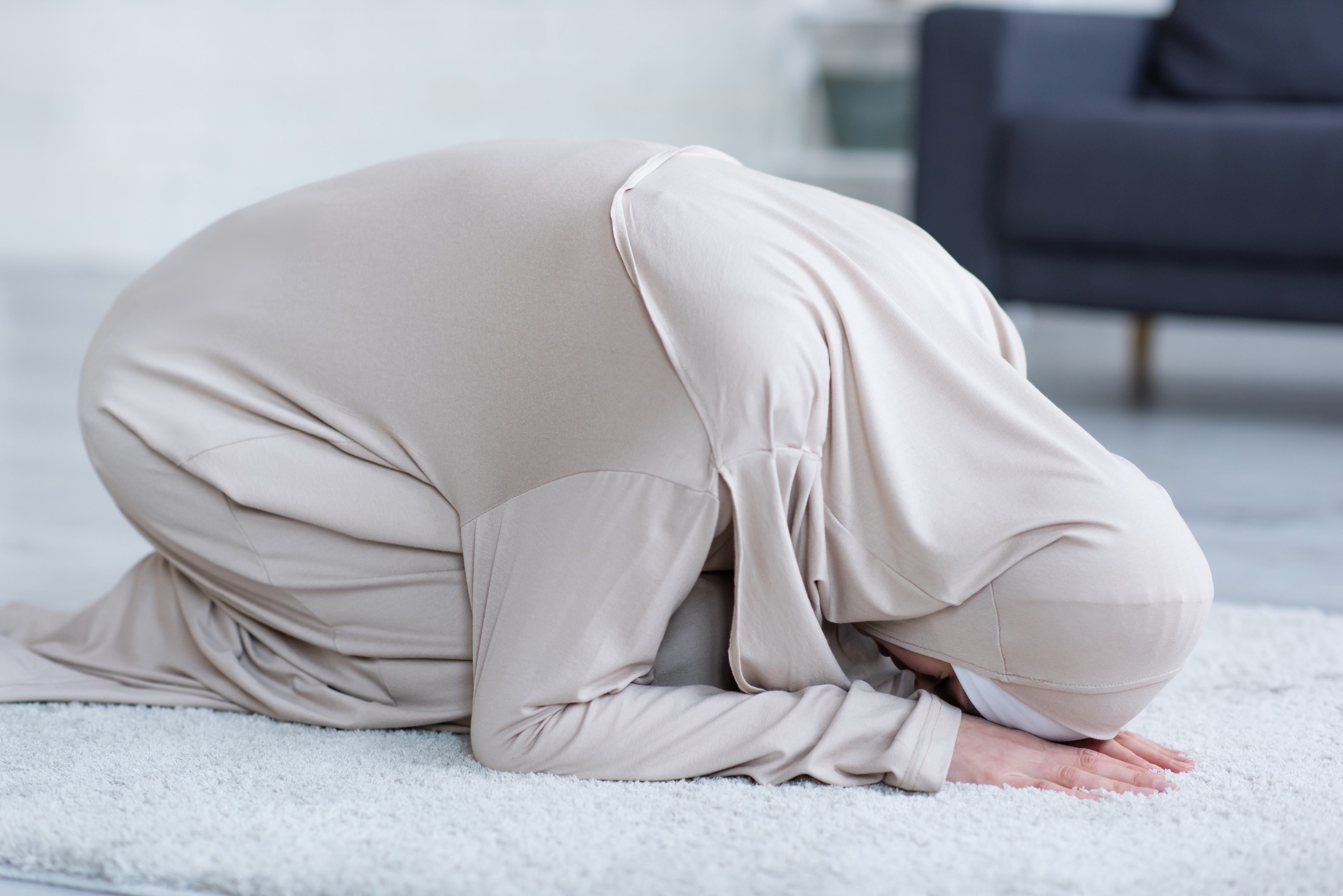
The menstrual phase is your bleed. Hormones are at their lowest and energy usually is too. This is a time for gentleness. Walking, light stretching, or full rest. Nothing is lost by resting here. And as Muslim women, we already pause from salah and fasting during this time. Allah built a rhythm of rest into our deen for us. Take the hint, sister.
The follicular phase comes after. Estrogen starts climbing and so does your energy, your mood, and your capacity. This is the phase where training feels almost easy. This is your window to push. Strength work, harder sessions, new challenges. Your body is primed for it.
Ovulation is the short peak in the middle. Many women feel their strongest here. Enjoy it, use it, but be a little careful with intense jumping and sharp movements, as some research suggests injury risk can rise slightly around this window.
The luteal phase is the long stretch before your next period. Progesterone rises, energy gradually drops, and your body runs warmer and hungrier. This is where most women feel like they're failing, because last week's workout suddenly feels heavy. Nothing is wrong with you. Shift to steadier, calmer training and let the intensity go. Your body is doing quiet, important work.
Training With It, Not Against It
Once you see the pattern, everything changes. You stop comparing your luteal self to your follicular self. You plan your harder efforts for the weeks your body is built for them, and you stop calling rest failure during the weeks it isn't.
This is not lowering the bar. Walahi, it is the opposite. Women who train with their cycle tend to stay consistent for years, because they stop burning out fighting their own biology every month. The strongest thing you can do is listen to the body Allah gave you and work with its design, not against it.
Start This Simply
You don't need anything complicated to begin. Just start noticing. Track your cycle, even on paper, and write one word about your energy each day. Within two or three months you will see your own pattern clearly, and it will be yours, not a textbook's. Because that's the other thing I learned late: every woman's cycle is her own. Different lengths, different flows, different rhythms of energy. The Sunnah made room for all of that variation centuries ago.
Your body is an amanah. Learning how it actually works is part of honoring the trust.
References & Sources
1. Qur'an, Surah Al-Baqarah 2:222 — "And they ask you about menstruation..." — the Qur'an addresses menstruation directly and without shame.
2. The hadith of Fatimah bint Abi Hubaysh (رضي الله عنها), who asked the Prophet ﷺ about istihadah (irregular bleeding) and its distinction from menstruation: "That is from a blood vessel and is not menstruation..." Sahih al-Bukhari (306) and Sahih Muslim (333) — establishing the different types of bleeding in the Sunnah.
3. On the sign of purity: the women of the Ansar would send Aishah (رضي الله عنها) cotton to ask about the end of the menses, and she would say: "Do not hurry until you see the white discharge (al-qassah al-baydaa)." Related by Malik in Al-Muwatta (Book of Purity) and al-Bukhari (mu'allaq, Book of Menses).
4. On variation between women's cycles: the fiqh of menses across the madhahib acknowledges differing durations and habits (adah) from woman to woman. See Ibn Qudamah, Al-Mughni, Book of Menses.
5. The Prophet ﷺ said: "...your body has a right over you..." Sahih al-Bukhari (5199).
6. On cycle phases and training: McNulty, K.L. et al. (2020), "The Effects of Menstrual Cycle Phase on Exercise Performance in Eumenorrheic Women: A Systematic Review and Meta-Analysis," Sports Medicine, 50, 1813–1827.


Join The Community
Be among the first.
Sign up for a free 7-day trial and look at everything we're building.